Hello and Welcome!

I will be posting books that are widely read and appreciated

I may not be able to post often, but it will be my endeavour to post as much as I can,  so keep visiting......

Please send your comments/suggestions/feedback to
ngnm4ever@gmail.com.I will get back to you as soon as I can

Cheers!!!

I am looking for latest issues of GQ British/US edition. Please email me if you know where I can download it. Thanks!!!


Tuesday, March 16, 2010

How The Mighty Fall: And Why Some Companies Never Give In by Jim Collins

The Book:


How the Mighty Fall : And Why Some Companies Never Give in
225 Pages |PDF |9.9MB |ISBN: 0977326411

About the Book:

How the Mighty Fall addresses two related questions: Why do good companies fail? and how does management respond once a company gets into trouble? Collins introduces a five stage model to answer these questions, where steps one and two address the roots of corporate failure and steps three through five managements' response.

Collins' analysis of management response to decline--denial of risk, grasping for salvation, and capitulation to irrelevance or death--accurately describe how leaders respond to deterioration in their business. This analysis here is solid, the writing clear, and the tempo brisk. Collins does a particularly good job of describing dysfunctional leadership behaviors of companies is in decline.

Collins' analysis of why companies get into trouble in the first place is much less compelling. Companies fail, according to Collins, when success breeds managerial hubris, which leads to overreach and ultimately failure. Like many of Collins' findings, this makes intuitive sense. Unfortunately in this case, his core argument runs counter to research on hundreds of companies, conducted over decades by dozens of scholars. There are two major flaws in Collins argument.

First, he claims that companies get into trouble because they overreach and expand beyond their core. This is consistent with data showing that diversified companies trade at a discount to focused rivals. Recent research published in the Journal of Financial Economics and the Journal of Finance has established that the companies often diversify to escape decline in their core business. Overreach is a symptom--not a cause--of decline and thus cannot explain its roots.

Second, Collins ignores a rich body of research that finds decline sets in not because companies stray from their core, but because they stick too close to it. Clay Christensen's research on disruptive technology, for example, demonstrates that companies stumble when they stay too close to their established customers and fail to serve emerging segments. The competency trap literature finds that companies get locked in by what they do well and struggle to adapt when circumstances change. Hubris and overreach, of course, play a role in corporate decline, but a well-established body of research suggests that they are rarely the root causes.

Download from Rapidshare.com

Password: ngnm

Saturday, February 20, 2010

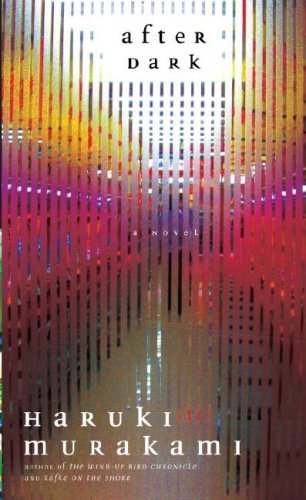
After Dark by Haruki Murakami


After Dark by Haruki Murakami
Knopf| 196 pages| ISBN: 0307265838| 2 MB

About the book :

Murakami's 12th work of fiction is darkly entertaining and more novella than novel. Taking place over seven hours of a Tokyo night, it intercuts three loosely related stories, linked by Murakami's signature magical-realist absurd coincidences. When amateur trombonist and soon-to-be law student Tetsuya Takahashi walks into a late-night Denny's, he espies Mari Asai, 19, sitting by herself, and proceeds to talk himself back into her acquaintance. Tetsuya was once interested in plain Mari's gorgeous older sister, Eri, whom he courted, sort of, two summers previously. Murakami then cuts to Eri, asleep in what turns out to be some sort of menacing netherworld. Tetsuya leaves for overnight band practice, but soon a large, 30ish woman, Kaoru, comes into Denny's asking for Mari: Mari speaks Chinese, and Kaoru needs to speak to the Chinese prostitute who has just been badly beaten up in the nearby "love hotel" Kaoru manages. Murakami's omniscient looks at the lives of the sleeping Eri and the prostitute's assailant, a salaryman named Shirakawa, are sheer padding, but the probing, wonderfully improvisational dialogues Mari has with Tetsuya, Kaoru and a hotel worker named Korogi sustain the book until the ambiguous, mostly upbeat dénouement

Download from Rapidshare.com

Password: ngnm

Monday, January 4, 2010

Books by Ken Follett

The Pillars of the Earth


With this book, Follett risks all and comes out a clear winner, escaping the narrow genre of suspense thrillers to take credit for a historical novel of gripping readability, authentic atmosphere and detail and memorable characterization. Set in 12th-century England, the narrative concerns the building of a cathedral in the fictional town of Kingsbridge. The ambitions of three men merge, conflict and collide through four decades during which social and political upheaval and the internal politics of the church affect the progress of the cathedral and the fortunes of the protagonists. The insightful portrayals of an idealistic master builder, a pious, dogmatic but compassionate prior and an unscrupulous, ruthless bishop are balanced by those of a trio of independent, resourceful women (one of them quite loathesome) who can stand on their own as memorable characters in any genre. Beginning with a mystery that casts its shadow on ensuing events, the narrative is a seesaw of tension in which circumstances change with shocking but true-to-life unpredictability. Follett's impeccable pacing builds suspense in a balanced narrative that offers action, intrigue, violence and passion as well as the step-by-step description of an edifice rising in slow stages, its progress tied to the vicissitudes of fortune and the permutations of evolving architectural style. Follett's depiction of the precarious balance of power between monarchy and religion in the Middle Ages, and of the effects of social upheavals and the forces of nature (storms, famines) on political events; his ability to convey the fine points of architecture so that the cathedral becomes clearly visualized in the reader's mind; and above all, his portrayals of the enduring human emotions of ambition, greed, bravery, dedication, revenge and love, result in a highly engrossing narrative. Manipulating a complex plot in which the characters interact against a broad canvas of medieval life, Follett has written a novel that entertains, instructs and satisfies on a grand scale

World Without End (Sequel to The Pillars of the Earth)


In 1989 Ken Follett astonished the literary world with The Pillars of the Earth, a sweeping epic novel set in twelfth-century England centered on the building of a cathedral and many of the hundreds of lives it affected. Critics were overwhelmed--"it will hold you, fascinate you, surround you" (Chicago Tribune)--and readers everywhere hoped for a sequel.

World Without End takes place in the same town of Kingsbridge, two centuries after the townspeople finished building the exquisite Gothic cathedral that was at the heart of The Pillars of the Earth. The cathedral and the priory are again at the center of a web of love and hate, greed and pride, ambition and revenge, but this sequel stands on its own. This time the men and women of an extraordinary cast of characters find themselves at a crossroad of new ideas--about medicine, commerce, architecture, and justice. In a world where proponents of the old ways fiercely battle those with progressive minds, the intrigue and tension quickly reach a boiling point against the devastating backdrop of the greatest natural disaster ever to strike the human race--the Black Death.

Three years in the writing, and Eighteen years after Pillars of the Earth weighed in with almost 1,000 pages of juicy historical fiction about the construction of a 12th-century cathedral in Kingsbridge, England, bestseller Follett returns to 14th-century Kingsbridge with an equally weighty tome that deftly braids the fate of several of the offspring of Pillars' families with such momentous events of the era as the Black Death and the wars with France. Four children, who will become a peasant's wife, a knight, a builder and a nun, share a traumatic experience that will affect each of them differently as their lives play out from 1327 to 1361. Follett studs the narrative with gems of unexpected information such as the English nobility's multilingual training and the builder's technique for carrying heavy, awkward objects. While the novel lacks the thematic unity of Pillars, readers will be captivated by the four well-drawn central characters as they prove heroic, depraved, resourceful or mean. Fans of Follett's previous medieval epic will be well rewarded.

Download both the books from Rapidshare.com (Size ~ 5.75 MB)

Password : ngnm

Friday, December 4, 2009

THE LIFE AND TIMES OF THE THUNDERBOLT KID [A MEMOIR] BY BILL BRYSON

The Book


THE LIFE AND TIMES OF THE THUNDERBOLT KID [A MEMOIR] BY BILL BRYSON
Broadway | 207 pages | ISBN 076791936X | PDF | 2.2 MB

About the Book

Bill Bryson was born in the middle of the American century1951in the middle of the United StatesDes Moines, Iowain the middle of the largest generation in American historythe baby boomers.As one of the best and funniest writers alive, he is perfectly positioned to mine his memories of a totally all-American childhood for 24-carat memoir gold. Like millions of his generational peers, Bill Bryson grew up with a rich fantasy life as a superhero. In his case, he ran around his house and neighborhood with an old football jersey with a thunderbolt on it and a towel about his neck that served as his cape, leaping tall buildings in a single bound and vanquishing awful evildoers (and morons)-in his head-as "The Thunderbolt Kid." Using this persona as a springboard, Bill Bryson re-creates the life of his family and his native city in the 1950s in all its transcendent normalitya life at once completely familiar to us all and as far away and unreachable as another galaxy.It was, he reminds us, a happy time, when automobiles and televisions and appliances (not to mention nuclear weapons) grew larger and more numerous with each passing year, and DDT, cigarettes, and the fallout from atmospheric testing were considered harmless or even good for you. He brings us into the life of his loving but eccentric family, including affectionate portraits of his father, a gifted sportswriter for the local paper and dedicated practitioner of isometric exercises, and OF his mother, whose job as the home furnishing editor for the same paper left her little time for practicing the domestic arts at home.The many readers of Bill Brysons earlier classic, A Walk in the Woods, will greet the reappearance in these pages of the immortal Stephen Katz, seen hijacking literally boxcar loads of beer.Joined in the Bryson gallery of immortal characters by the demonically clever Willoughby brothers, who apply their scientific skills and can-do attitude to gleefully destructive ends.

Download from Rapidshare.com

Password : ngnm

Monday, November 2, 2009

Marley & Me: Life and Love with the World's Worst Dog by John Grogan

The Book:


Marley & Me: Life and Love with the World's Worst Dog by John Grogan
Harper |PDF | ISBN : 0061687200| 433 Pages

About the book:

Labrador retrievers are generally considered even-tempered, calm and reliable;and then there's Marley, the subject of this delightful tribute to one Lab who doesn't fit the mold. Grogan, a columnist for the Philadelphia Inquirer, and his wife, Jenny, were newly married and living in West Palm Beach when they decided that owning a dog would give them a foretaste of the parenthood they anticipated. Marley was a sweet, affectionate puppy who grew into a lovably naughty, hyperactive dog. With a light touch, the author details how Marley was kicked out of obedience school after humiliating his instructor (whom Grogan calls Miss Dominatrix) and swallowed an 18-karat solid gold necklace (Grogan describes his gross but hilarious "recovery operation"). With the arrival of children in the family, Marley became so incorrigible that Jenny, stressed out by a new baby, ordered her husband to get rid of him; she eventually recovered her equilibrium and relented. Grogan's chronicle of the adventures parents and children (eventually three) enjoyed with the overly energetic but endearing dog is delivered with great humor. Dog lovers will love this account of Grogan's much loved canine.

Download from Rapidshare.com

Password : ngnm

Sunday, October 18, 2009

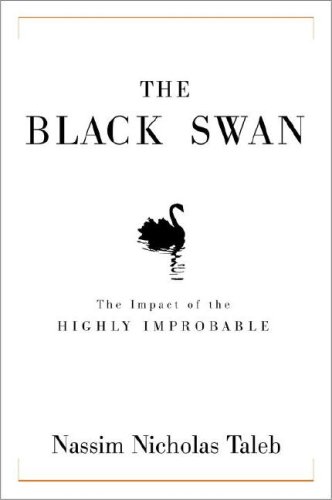
The Black Swan: The Impact of the Highly Improbable by Nassim Nicholas Taleb

The Book:


The Black Swan
Random House | 401 pages | PDF | ISBN 1400063515 | 6.8 MB

About the Book

Four hundred years ago, Francis Bacon warned that our minds are wired to deceive us. "Beware the fallacies into which undisciplined thinkers most easily fall--they are the real distorting prisms of human nature." Chief among them: "Assuming more order than exists in chaotic nature." Now consider the typical stock market report: "Today investors bid shares down out of concern over Iranian oil production." Sigh. We're still doing it.

Our brains are wired for narrative, not statistical uncertainty. And so we tell ourselves simple stories to explain complex thing we don't--and, most importantly, can't--know. The truth is that we have no idea why stock markets go up or down on any given day, and whatever reason we give is sure to be grossly simplified, if not flat out wrong.

Nassim Nicholas Taleb first made this argument in Fooled by Randomness, an engaging look at the history and reasons for our predilection for self-deception when it comes to statistics. Now, in The Black Swan: the Impact of the Highly Improbable, he focuses on that most dismal of sciences, predicting the future. Forecasting is not just at the heart of Wall Street, but it’s something each of us does every time we make an insurance payment or strap on a seat belt.

The problem, Nassim explains, is that we place too much weight on the odds that past events will repeat (diligently trying to follow the path of the "millionaire next door," when unrepeatable chance is a better explanation). Instead, the really important events are rare and unpredictable. He calls them Black Swans, which is a reference to a 17th century philosophical thought experiment. In Europe all anyone had ever seen were white swans; indeed, "all swans are white" had long been used as the standard example of a scientific truth. So what was the chance of seeing a black one? Impossible to calculate, or at least they were until 1697, when explorers found Cygnus atratus in Australia.

Nassim argues that most of the really big events in our world are rare and unpredictable, and thus trying to extract generalizable stories to explain them may be emotionally satisfying, but it's practically useless. September 11th is one such example, and stock market crashes are another. Or, as he puts it, "History does not crawl, it jumps." Our assumptions grow out of the bell-curve predictability of what he calls "Mediocristan," while our world is really shaped by the wild powerlaw swings of "Extremistan."

In full disclosure, I'm a long admirer of Taleb's work and a few of my comments on drafts found their way into the book. I, too, look at the world through the powerlaw lens, and I too find that it reveals how many of our assumptions are wrong. But Taleb takes this to a new level with a delightful romp through history, economics, and the frailties of human nature.

Download from Rapidshare.com

Password : ngnm

Saturday, October 10, 2009

Sea of Poppies by Amitav Ghosh

The Book:


About the Book:

Diaspora, myth and a fascinating language mashup propel the Rubik's cube of plots in Ghosh's picaresque epic of the voyage of the Ibis, a ship transporting Indian girmitiyas (coolies) to Mauritius in 1838. The first two-thirds of the book chronicles how the crew and the human cargo come to the vessel, now owned by rising opium merchant Benjamin Burnham. Mulatto second mate Zachary Reid, a 20-year-old of Lord Jim–like innocence, is passing for white and doesn't realize his secret is known to the gomusta (overseer) of the coolies, Baboo Nob Kissin, an educated Falstaffian figure who believes Zachary is the key to realizing his lifelong mission. Among the human cargo, there are three fugitives in disguise, two on the run from a vengeful family and one hoping to escape from Benjamin. Also on board is a formerly high caste raj who was brought down by Benjamin and is now on his way to a penal colony. The cast is marvelous and the plot majestically serpentine, but the real hero is the English language, which has rarely felt so alive and vibrant.

One of Economist's Best Books of 2008

Farrar, Straus and Giroux | 399 Pages | ISBN: 0312428596 | 1.2 MB

Download from Rapidshare.com

Password : ngnm

Tuesday, September 15, 2009

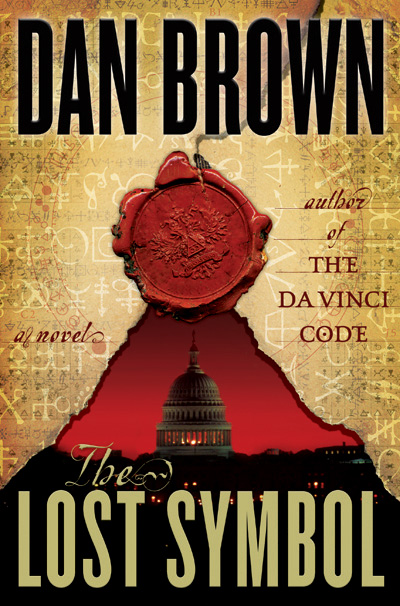
The Lost Symbol by Dan Brown

The Book:


About the Book:

The Lost Symbol begins with an ancient ritual, a shadowy enclave, and of course, a secret. Readers know they are in Dan Brown territory when, by the end of the first chapter, a secret within a secret is revealed. To tell too much would ruin the fun of reading this delicious thriller, so you will find no spoilers here. Suffice it to say that as with many series featuring a recurring character, there is a bit of a formula at work (one that fans will love). Again, brilliant Harvard professor Robert Langdon finds himself in a predicament that requires his vast knowledge of symbology and superior problem-solving skills to save the day. The setting, unlike other Robert Langdon novels, is stateside, and in Brown's hands Washington D.C. is as fascinating as Paris or Vatican City (note to the D.C. tourism board: get your "Lost Symbol" tour in order). And, as with other Dan Brown books, the pace is relentless, the revelations many, and there is an endless parade of intriguing factoids that will make you feel like you are spending the afternoon with Robert Langdon and the guys from Mythbusters.

Nothing is as it seems in a Robert Langdon novel, and The Lost Symbol itself is no exception--a page-turner to be sure, but Brown also challenges his fans to open their minds to new information. Skeptical? Imagine how many other thrillers would spawn millions of Google searches for noetic science, superstring theory, and Apotheosis of Washington. The Lost Symbol is brain candy of the best sort--just make sure to set aside time to enjoy your meal.

339 pages , 2.6 MB


Download from Rapidshare.com

Password: ngnm
Monday, August 31, 2009

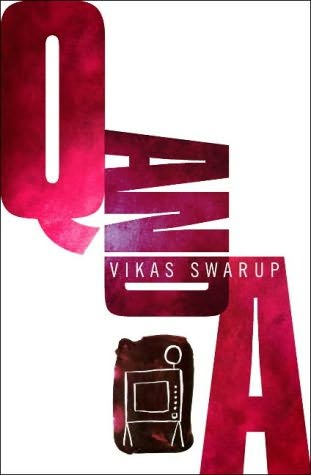
Q & A : A Novel By Vikas Swarup


Q & A : A Novel by Vikas Swarup (Re-released as Slumdog Millionaire)

Random House|384 pages|ISBN: 0743267486|1.25 MB

About the book:

Vikas Swarup's spectacular debut novel opens in a jail cell in Mumbai, India, where Ram Mohammad Thomas is being held after correctly answering all twelve questions on India's biggest quiz show, Who Will Win a Billion? It is hard to believe that a poor orphan who has never read a newspaper or gone to school could win such a contest. But through a series of exhilarating tales Ram explains to his lawyer how episodes in his life gave him the answer to each question.

Ram takes us on an amazing review of his own history -- from the day he was found as a baby in the clothes donation box of a Delhi church to his employment by a faded Bollywood star to his adventure with a security-crazed Australian army colonel to his career as an overly creative tour guide at the Taj Mahal.

Swarup's Q & A is a beguiling blend of high comedy, drama, and romance that reveals how we know what we know -- not just about trivia, but about life itself. Cutting across humanity in all its squalor and glory, Vikas Swarup presents a kaleidoscopic vision of the struggle between good and evil -- and what happens when one boy has no other choice in life but to survive

Review:

"It was an inspired idea by Vikas Swarup to write Q & A...A broad and sympathetic humanity underpins the whole book."

-- The Sunday Telegraph, London

"A very clever story told very cleverly and at a relentless pace."

-- The Sydney Morning Herald, Australia

"Swarup is an accomplished storyteller, and Q & A has all the immediacy and impact of an oral account."

-- Daily Mail, London

"[A] rare, seemingly effortless brew of humour, drama, romance and social realism...Swarup...has achieved a triumph with this thrilling, endearing work which gets into the heart and soul of modern India."

-- The New Zealand Herald

"Q & A is that rare novel that chugs along on the parallel tracks of being a rollicking read as well as being a polished, varnished, finished work of impressive craftsmanship."

-- Hindustan Times, India

Download from Rapidshare.com

Password:ngnm

Sunday, August 23, 2009

The Snowball : Warren Buffett and the business of Life by Alice Schroeder


About the Book

From Publishers Weekly


In this startlingly frank account of Buffett's life, Schroeder, a former managing director at Morgan Stanley—and hand picked by Buffett to be his biographer—strips away the mystery that has long cloaked the word's richest man to reveal a life and fortune erected around lucid and inspired business vision and unimaginable personal complexity. In a book that is dominated by unstinting descriptions of Buffett's appetites—for profit, women (particularly nurturing maternal types), food (Buffett maintained his and his family's weight by "dangling money")—it is refreshing that Schroeder keeps her tone free of judgment or awe; Buffett's plain-speaking suffuses the book and renders his public and private successes and failures wonderfully human and universal. Schroeder's sections detailing the genesis of Buffett's investment strategy, his early mentoring by Benjamin Graham (who imparted the memorable "cigar butt" scheme: purchasing discarded stocks and taking a final puff). Inspiring managerial advice abounds and competes with gossipy tidbits (the married Buffett's very public relationship with Washington Post editor Katherine Graham) in this rich, surprisingly affecting biography.

Review

“The mandatory book to read in these treacherous times of financial crisis.…A thoughtful and intimate biography of the globe’s wisest investor.” –Forbes

“Will mesmerize anyone interested in who Mr. Buffett is or how he got that way.” The Snowball tells a fascinating story.”–New York Times

“If the replication of any great achievement first requires knowledge of how it was done, then The Snowball, the most detailed glimpse inside Warren Buffett and his world that we likely will ever get, should become a Bible for capitalists.” —Washington Post

“Anyone who has been watching events unfold in recent months–which would be everyone–can now appreciate the wisdom of Buffett....The most authoritative portrait of one of the most important American investors of our time.”–Los Angeles Times

“Even people who don't care a whit about business will be intrigued by this portrait… Schroeder, a former insurance-industry analyst, spent years interviewing Buffett, and the result is a side of the Oracle of Omaha that has rarely been seen.” —Time Magazine

"Schroeder... has a meat-and-potatoes style that matches the homespun wisdom of her subject...Now more than ever, Buffett's emphasis on fundamentals seems like genius. It's the perfect moment for a great book on an immensely inspiring capitalist."—People, four stars

“Schroeder…is well equipped to elucidate Buffett’s deals…[and] Buffett’s life abounds with good stories.”—New Yorker

“You will learn a lot about one of the nation's most compelling and important men from reading The Snowball.” —Boston Globe

“In The Snowball, novice biographer Alice Schroeder gives us one of the most detailed, candid life stories ever published…It is almost impossible to stop reading.” —Christian Science Monitor

“A penetrating and personal look at the Oracle of Omaha…An astute, and at times riveting, read–especially now.”—BusinessWeek

“Everyone knows that in a deep and liquid capital market like that of the US, it is just about impossible to beat the stock market averages over anything more than the short term. But Buffett has been ahead of the curve for most of the past 50 years, making him one of the world’s richest people. Alice Schroeder’s massive authorized biography, The Snowball, provides some clues about how he’s done it.” —Financial Times

“In this startlingly frank account of Buffett’s life, Schroeder, a former managing director at Morgan Stanley–and hand picked by Buffett to be his biographer–strips away the mystery that has long cloaked the word’s richest man to reveal a life and fortune erected around lucid and inspired business vision and unimaginable personal complexity.” —Publishers Weekly

“For students of the Oracle of Omaha, or even those looking for a little reassurance during the crisis, Schroeder's book is a fascinating study of America's most successful investor.” —New York Post

“… Alice Schroeder’s accumulation of detail, her vivid, artless descriptions of people and places, and the resulting narrative fluidity make this a compelling book. It has the bouncing vitality of an early Sinclair Lewis novel…”—Times Literary Supplement

“If you've looked at your 401(k) statement and started to fear that everyone in financial markets is either greedy, predatory or incompetent, do yourself a favor. Take $35 out of the mattress and buy a copy of Alice Schroeder's The Snowball: Warren Buffett and the Business of Life. At a time like this, it's a real comfort: Buffet is living proof there's at least one wholly rational person managing money…an excellent and highly enjoyable look at the business titan.” —Houston Chronicle

“Ms. Schroeder does a good job of pulling…volunteered disclosures out of Mr. Buffett but her real contribution is her own investment expertise which enables her to make the convoluted financing schemes over the last 50 years understandable to lay readers and truly instructive to the business information junkie.” —Washington Times

“Riveting and encyclopedic.... The overall power of the story carries “The Snowball” forward. There is much to be learned from it.”—wsj.com

“[A] monumental biography ... Schroeder got the best access yet of any Buffett biographer ... she deals out marvelously funny and poignant stories about Buffett and the conglomerate he runs, Berkshire Hathaway.”—Forbes.com


Product Description

Here is THE book recounting the life and times of one of the most respected men in the world, Warren Buffett. The legendary Omaha investor has never written a memoir, but now he has allowed one writer, Alice Schroeder, unprecedented access to explore directly with him and with those closest to him his work, opinions, struggles, triumphs, follies, and wisdom. The result is the personally revealing and complete biography of the man known everywhere as “The Oracle of Omaha.”

Although the media track him constantly, Buffett himself has never told his full life story. His reality is private, especially by celebrity standards. Indeed, while the homespun persona that the public sees is true as far as it goes, it goes only so far. Warren Buffett is an array of paradoxes. He set out to prove that nice guys can finish first. Over the years he treated his investors as partners, acted as their steward, and championed honesty as an investor, CEO, board member, essayist, and speaker. At the same time he became the world’s richest man, all from the modest Omaha headquarters of his company Berkshire Hathaway. None of this fits the term “simple.”

When Alice Schroeder met Warren Buffett she was an insurance industry analyst and a gifted writer known for her keen perception and business acumen. Her writings on finance impressed him, and as she came to know him she realized that while much had been written on the subject of his investing style, no one had moved beyond that to explore his larger philosophy, which is bound up in a complex personality and the details of his life. Out of this came his decision to cooperate with her on the book about himself that he would never write.

Never before has Buffett spent countless hours responding to a writer’s questions, talking, giving complete access to his wife, children, friends, and business associates—opening his files, recalling his childhood. It was an act of courage, as The Snowball makes immensely clear. Being human, his own life, like most lives, has been a mix of strengths and frailties. Yet notable though his wealth may be, Buffett’s legacy will not be his ranking on the scorecard of wealth; it will be his principles and ideas that have enriched people’s lives. This book tells you why Warren Buffett is the most fascinating American success story of our time.

Download from Rapidshare.com (Size ~ 7MB)

Password : ngnm